
Looking back over the past year, it’s easy to remember the small, everyday moments that made work feel alive — the spontaneous Slack pings that sparked quick fixes, the last-minute adjustments before deadlines, and the little wins that kept the chaos from taking over. Between video calls, chat threads, and the occasional Wi-Fi hiccup, we’ve learned a lot about how remote work really flows, what trips teams up, and how small systems quietly keep everything moving.
Even in a small, fully distributed team, work piles up in the weirdest ways. Tasks land in multiple channels, decisions get made in one chat and expected somewhere else, and figuring out who did what — or when — can feel like detective work. Over the past year, a few patterns have emerged that we wanted to share.
The Small Wins That Make a Difference
One of the things that stands out is how often small victories keep the day from feeling chaotic. Finding the answer to a tricky question without sending five messages, finally getting approval for a recurring expense, or remembering exactly where that one important document lives – these are the moments that make everything feel smoother.
Some days are more about improvisation. A team member fills in a missing step in a process, someone else shares a tip for saving time, or a quick check-in resolves a miscommunication before it becomes a headache. These micro-wins don’t make the headlines, but they add up.
Patterns We Keep Seeing
Over these months, certain rhythms have emerged across our teams. It’s not about the tools themselves, but the gaps they fill:
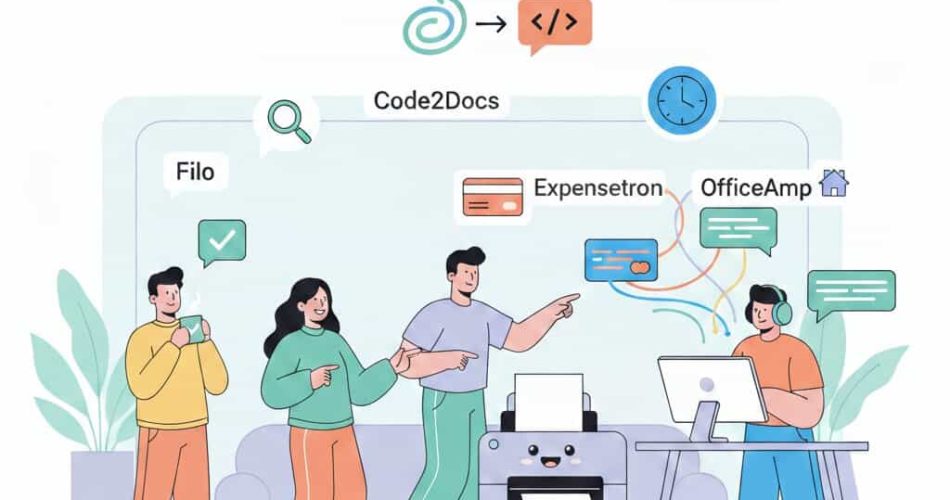
- Instant Context, No Hunting: Mid-project questions are inevitable. Instead of pausing to scavenge through old folders, teams use Filo to instantly surface answers from their existing conversations and docs. It’s about keeping the momentum, not building a library.
- Translating Technical Momentum: Code moves at light speed, but documentation usually lags behind. Code2Docs automatically turns those rapid-fire updates into readable notes so the rest of the team isn’t left in the dark.
- Clearing the Admin Static: Expenses and office requests are the “friction” of teamwork. Expensetron and OfficeAmp handle the paperwork quietly in the background so humans can stay focused on the actual work.
- The Pulse of Presence: Our “king,” AttendanceBot, remains the simplest way to see who’s in, remote, or OOO. It removes the “Are they at their desk?” guesswork without a single pestering message.
These tools aren’t the focus – the focus is the pattern itself: how work moves from one moment to the next, and what helps teams keep that flow going.
Life Between Tasks
Beyond the work itself, the little moments make this past year memorable. That quick Slack thread about a process improvement. The shared laugh over a botched video call. The informal “coffee break” catch-ups on Zoom or Teams. Work isn’t just tasks and tools – it’s these small interactions, even virtual ones, that keep the rhythm alive.
Sometimes, the chaos teaches lessons. Miscommunications highlight where processes need clarity. Bottlenecks reveal who could use extra support. Watching these moments unfold, even through screens and video calls, helps us understand what really matters for keeping a distributed team moving.
Looking Ahead
Looking back, this past year has been all about flow – making sure everyday work, questions, updates, and operational tasks fit together without creating extra chaos.
The bigger picture — keeping work coherent across tasks, people, and moments – is something we’ve focused on. Not by forcing teams to change how they work, but by giving context where it’s needed and letting the natural rhythm of remote work happen.
Here’s to the coming months of quick fixes, small victories, and all the everyday moments that make distributed teamwork feel like… work, but with a little flow.